Loading...
Serving Perris, CA and surrounding areas. (951) 564-0007
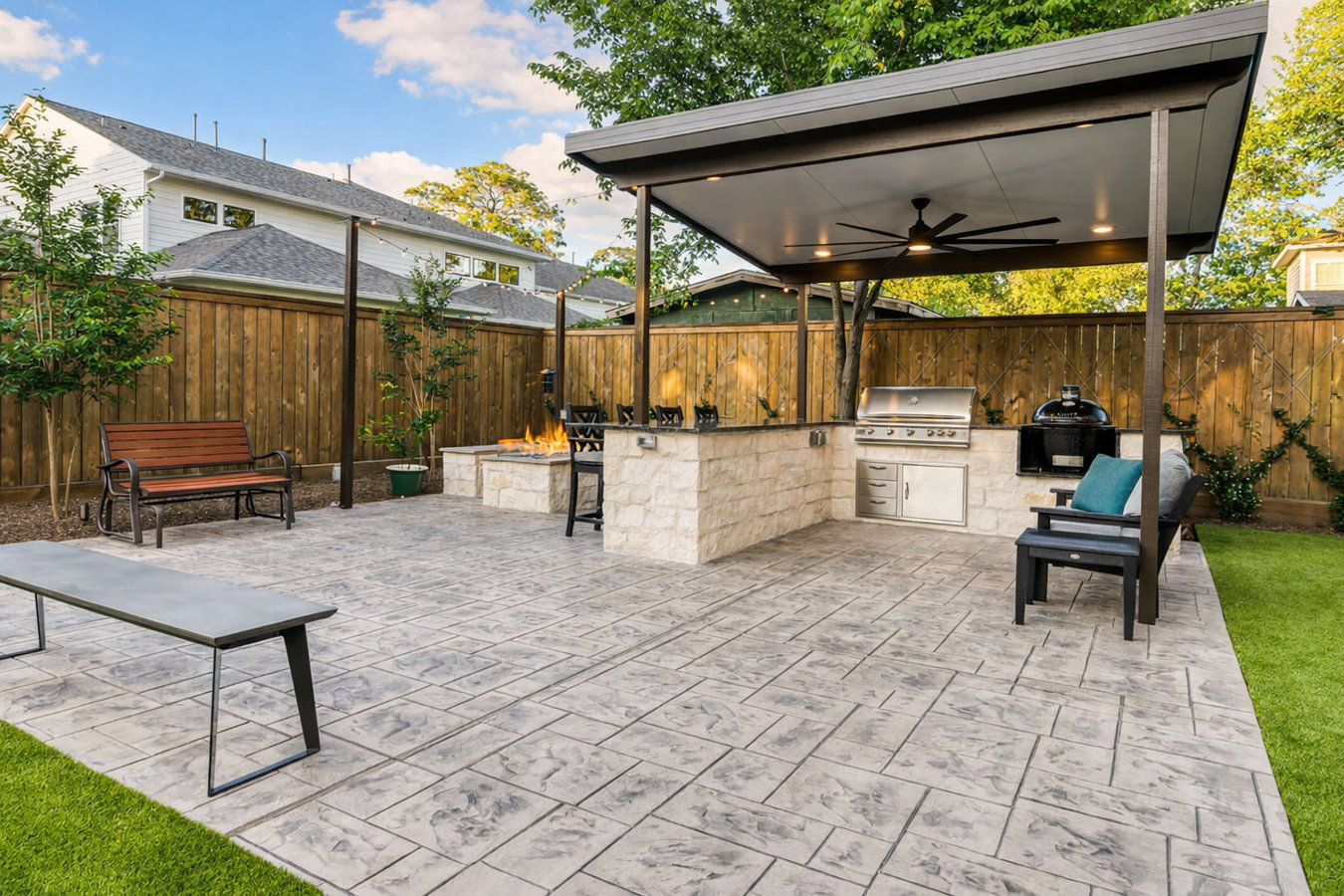
Perris Concrete Company handles concrete patio construction, driveways, retaining walls, and slab work throughout Moreno Valley, CA, and we respond to Moreno Valley estimates within one business day. We work in Sunnymead, Rancho Belago, and neighborhoods across the city, and we understand the clay soil movement and summer heat conditions that affect how concrete holds up in this area.
Most Moreno Valley homes were built between 1980 and 2005, and many of those original backyard slabs have cracked or settled unevenly thanks to the clay soil movement that is common across the Inland Empire. Our concrete patio construction work includes full base preparation and compaction, the right slab thickness for Moreno Valley conditions, and a finished surface that stays level through the summer-to-winter expansion and shrinkage cycles.
Driveways on single-family lots throughout Moreno Valley take a beating from the clay soil below and the 100-degree summers above. Homes built in the 1980s and 1990s near the Sunnymead corridor frequently have driveways that are now cracked, heaved, or flaking after decades of that seasonal stress, and replacing them with a properly reinforced slab makes far more sense than patching year after year.
Moreno Valley lots that sit on graded terrain or slope toward the street need retaining walls that can handle the wet-season soil pressure that builds up behind them. Clay soils here absorb a significant amount of water during winter rains, and walls that were not built with proper drainage or adequate mass often crack, tilt, or shift before they reach 20 years old.
ADU construction has grown steadily in Moreno Valley as homeowners look to add rental income on their existing lots. A properly prepared slab foundation, with the right rebar layout and base compaction for Moreno Valley soil conditions, is the first step in any addition or secondary unit project, and it determines how well the structure holds up over the long term.
Sidewalk sections in Moreno Valley that lift or crack due to tree root pressure or clay soil heave create trip hazards and can draw citations from the city. Replacing damaged sections with correctly formed concrete and a rebuilt base keeps the walk safe and avoids the uneven edges that form when new concrete is poured without addressing what caused the original failure.
Front entry steps on Moreno Valley homes that have settled or cracked create both a safety hazard and a curb appeal problem. Many of the original entry steps on homes built in the 1980s and 1990s used minimal base preparation, and decades of clay soil movement have left them tilted or crumbling at the edges.
Moreno Valley sits at about 1,600 feet in the Inland Empire, in a valley surrounded by the San Bernardino Mountains to the north. That position creates a climate that runs hotter and drier than the coast, with summers regularly topping 100 degrees and winter nights that drop below freezing several times each year. The freeze-thaw cycle that results, even if brief, is a real factor for concrete flatwork. Water gets into small cracks in the fall, freezes and expands overnight, then thaws in the morning sun. Repeat that dozens of times over a few winters and a minor surface crack becomes a structural one. Most Moreno Valley homeowners are dealing with housing stock built between 1980 and 2005, which means driveways, patios, and walkways from that era are now 20 to 45 years old and approaching or past the end of a typical concrete lifespan. The rapid growth Moreno Valley saw in the 1980s and 1990s means a large share of the city is hitting that maintenance window at the same time.
The other defining condition here is the soil. Much of Moreno Valley sits on expansive clay soils documented throughout Riverside County by the California Geological Survey. These soils swell significantly when they absorb winter rain and shrink back as summer heat dries them out. That constant push-and-pull is one of the main reasons concrete slabs crack and shift here, even when the original pour was done reasonably well. A contractor working in Moreno Valley needs to account for this by compacting the base correctly, using adequate rebar, and sizing control joints properly. Skipping any of those steps sets the new concrete up for the same problems as the old slab.
Our crew serves Moreno Valley on a regular basis, pulling permits through the City of Moreno Valley Community Development Department for permitted work across the city. We work across the different housing eras here, from the older ranch-style tracts near the Sunnymead corridor to the larger two-story homes that went up in Rancho Belago on the eastern edge of the city in the 2000s. Those newer planned community homes in Rancho Belago tend to have bigger driveways and more square footage of flatwork, while the older western neighborhoods near March Air Reserve Base have homes where 30 to 40 year old concrete is now showing its age.
Getting to Moreno Valley from our Perris base is straightforward on the 215 freeway north. We work across major corridors including Alessandro Boulevard, Perris Boulevard, and Cactus Avenue, and we are familiar with the residential density differences between the city center neighborhoods near the Moreno Valley Mall and the quieter streets further east. Lake Perris State Recreation Area sits just to the south and is a point of reference we use when orienting to south Moreno Valley neighborhoods. We also serve Riverside to the northwest, and because we run jobs in both cities regularly, we can often schedule efficiently between them. Homeowners in south Moreno Valley who want to compare work we have done in the broader area can also ask about jobs we have completed in Perris, just a few miles south.
Reach out by phone or through our contact form and we respond within one business day. We schedule Moreno Valley estimates promptly and do not leave requests unanswered.
We visit your property to evaluate soil conditions, existing concrete, grade, and any permit requirements for your specific project in Moreno Valley. You receive a written quote covering base preparation, reinforcing, slab thickness, and permit costs before we ask for a commitment.
We manage any permit applications through the City of Moreno Valley so you do not have to track that process. For summer projects, we schedule pours early in the morning to avoid midday heat that can cause the surface to set too fast and develop cracks before it reaches full strength.
We complete the job, pass any required city inspection, and leave the site tidy. You do not need to be home during the work, but we coordinate on access and walk you through cure time guidelines so you know when vehicles or heavy loads can go on the new concrete.
We serve Moreno Valley homeowners in Sunnymead, Rancho Belago, and neighborhoods across the city. No pressure, no obligation. Just a straightforward quote from a contractor who works in Moreno Valley regularly.
(951) 564-0007Moreno Valley is one of the largest cities in Riverside County, with a population of around 210,000 people. It grew rapidly during the 1980s and 1990s as affordable housing drew families from Los Angeles and Orange County, and that growth shaped the city in a distinctive way. The western part of the city, near March Air Reserve Base, has some of the earliest housing stock dating from the late 1970s and early 1980s. The eastern neighborhoods, including the planned community of Rancho Belago, are significantly newer, with larger homes built in the 2000s on bigger lots. The older areas tend to have more maintenance-aged concrete, while the newer east side has more square footage of flatwork per property. The Moreno Valley Mall on Moreno Beach Drive has been a central point in the city since 1992, and residential neighborhoods spread out in all directions from the city center.
The city sits in the San Gorgonio Pass area of the Inland Empire, with the San Bernardino Mountains visible to the north and the valley floor stretching south toward Perris. March Air Reserve Base on the western edge of the city is both a major employer and a well-known landmark. The Sunnymead area along Alessandro Boulevard is one of the older commercial and residential corridors. Nearly every home in Moreno Valley is a single-family detached house with a stucco exterior, concrete tile roof, and a standard concrete driveway or patio, which makes concrete work one of the most common home improvement projects residents undertake. Our neighbors in Riverside to the northwest face some of the same soil and climate challenges, and we cover that city as well.
Expert driveway installation built for lasting curb appeal and durability.
View serviceCustom patio slabs designed for outdoor living and long-term performance.
View serviceDecorative stamped finishes that replicate stone, brick, or wood textures.
View serviceSafe, smooth sidewalks poured to code for residential and commercial properties.
View serviceHeavy-duty garage floor slabs built to handle vehicles and daily wear.
View serviceArtistic concrete finishes including overlays, staining, and custom patterns.
View serviceStructural retaining walls engineered to hold soil and prevent erosion.
View servicePrecision interior floor pours for homes, warehouses, and commercial spaces.
View serviceSlip-resistant, heat-reflective pool decks built for safety and style.
View serviceSolid concrete steps and staircases that meet safety codes and look great.
View serviceReinforced slab foundations poured to spec for residential and commercial builds.
View serviceFull foundation installation services from site prep to final pour.
View serviceDurable parking lots designed for high-traffic commercial use.
View serviceExpert foundation lifting and leveling to correct settling and damage.
View serviceOur crew works throughout Moreno Valley and responds to estimates within one business day. Call now or submit a request online before your project gets pushed into peak season.